

Understanding Human Experience in all it´s varieties from conscious to implicit is a great challenge. We help our clients to understand what humans feel, think, do and see since over 20 years.


Understanding Human Experience in all it´s varieties from conscious to implicit is a great challenge. We help our clients to understand what humans feel, think, do and see since over 20 years.
Attention research is a critical component of our research, as it helps us understand how people perceive, feel, and think when consuming a product.

Attention is the ability of humans to select one stimulus over the other, by a mental integration of perception (sys0), emotion (sys1), and cognition (sys2) to fulfil the desire.
All communication seeks to fulfill a (connecting) PURPOSE. Human nature and desire (purpose) is a RELATIONSHIP.

Meaningful attention is FOCUSED and positively ENGAGED rather than distracted or scattered.



we want to provide the leading measurement technologies for meaningful attention
We use an integrated digital 3 system approach – sys0,1, and 2 with InContext Research
New screens, big screen, gaming screen- are all accessible for our services
We want to add meaning and value to the discussion about attention
Attention, as a “higher” concept, which is based in Human experience
SEMANTICS vs. pure Syntax
We want to work with partners, associations, academia and industries – e.g ARF, Affectiva, PupilLabs and many more
Discover InContext Research
Discover our insights
Our university cooperations

Which products do consumers actually see, how long do they look, and does that attention drive trial intent? InContext Eye Tracking solved this by running SEAL inside a live simulated Instagram feed, on participants’ own smartphones, with no screen recording, and no app required. Participants engaged with the Instagram in-feed ad using a simulated Instagram feed. The ad was inserted in the third position in between native general interest content.
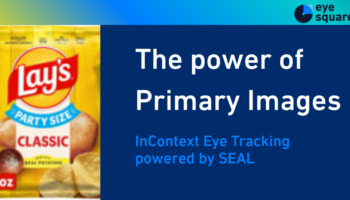
PepsiCo’s iconic chips brand Lay’s decided to go for a drastic package redesign at the end of 2025. The redesign is quoted to be the “Biggest redesign in [Lay’s] history”, and its main goal was to highlight the natural components and origin of the product. The new design choices touched the logo, typeface, imagery and colors, and were worked out closely with consumers. We wanted to find out if the new pack design translates into elevated sales in a real online shopping scenario. Interested in how we provided a complete solution for brands to understand shopper behavior and attitudes?
Download our study now!
User-generated content (UGC) has become a standard tool in e-commerce marketing. Brands add customer photos, reviews, and videos to product pages assuming it builds trust and drives sales. Most brands though have no idea whether their content is being seen, how shoppers engage with it, or whether it influences purchase decisions. Without behavioral data, you are optimizing blindly.
Download our study and overcome the challenges!


A quick, powerful and beautiful appearance pays off to get the most attention for your social video ads. This comprehensive smartphone-eye-tracking study offers the key to successful social ads in different channels.
For this whitepaper, our team analyzed an ad from Deutsche Bank.
In this paper, you will learn more about eye square tools and data used in this project.
You will also learn why it is positive for a brand to add as much emotion as possible to its advertising.
In this paper, you’ll learn all about attention in the advertising world.
Why does a digital video generate the most attention? Why do some ads attract more attention than others? To what extent does it differ from platform to platform? Are there attention changes due to different screen sizes?
These and a lot of other questions will be answered in this paper.


Media moments become shorter. More than 62% of media perceptions are short (< 2.5 seconds). Nevertheless, as shown in the main results of eye square’s extensive meta-analysis, good creations can still leave an impression in the memory if the user’s attention is understood as a gift.
See how McDonald’s mathematics teaching successfully links to burgers. The distributed attention on this heatmap shows that the participants are confused by the high information density. Three burgers, three prizes, the slogan, legal lines and brand logos – that’s too much for the viewer.
You have questions or feedback regarding our studies, whitepapers or case studies? We’re here to help and answer any question you might have. We look forward to hearing from you. Get in touch!
You need to load content from Turnstile to submit the form. Please note that doing so will share data with third-party providers.
More Information